

SKU:3 Part
Learn to Tell Stories: 3-Part Story Sequencing Cards
Couldn't load pickup availability
Picture stories for sequencing and storytelling, with audio in 6 languages
Learn to Tell Stories helps children put events in order and tell them as a story. Each story is told in three picture cards: a beginning, a middle and an end. There's no text on the cards and no clue to the order, so children work out what happened from the pictures alone. Three cue cards marked "What happened first?", "What happened next?" and "How did it end?" give each picture a place, helping children organise the story before they tell it.
At a glance
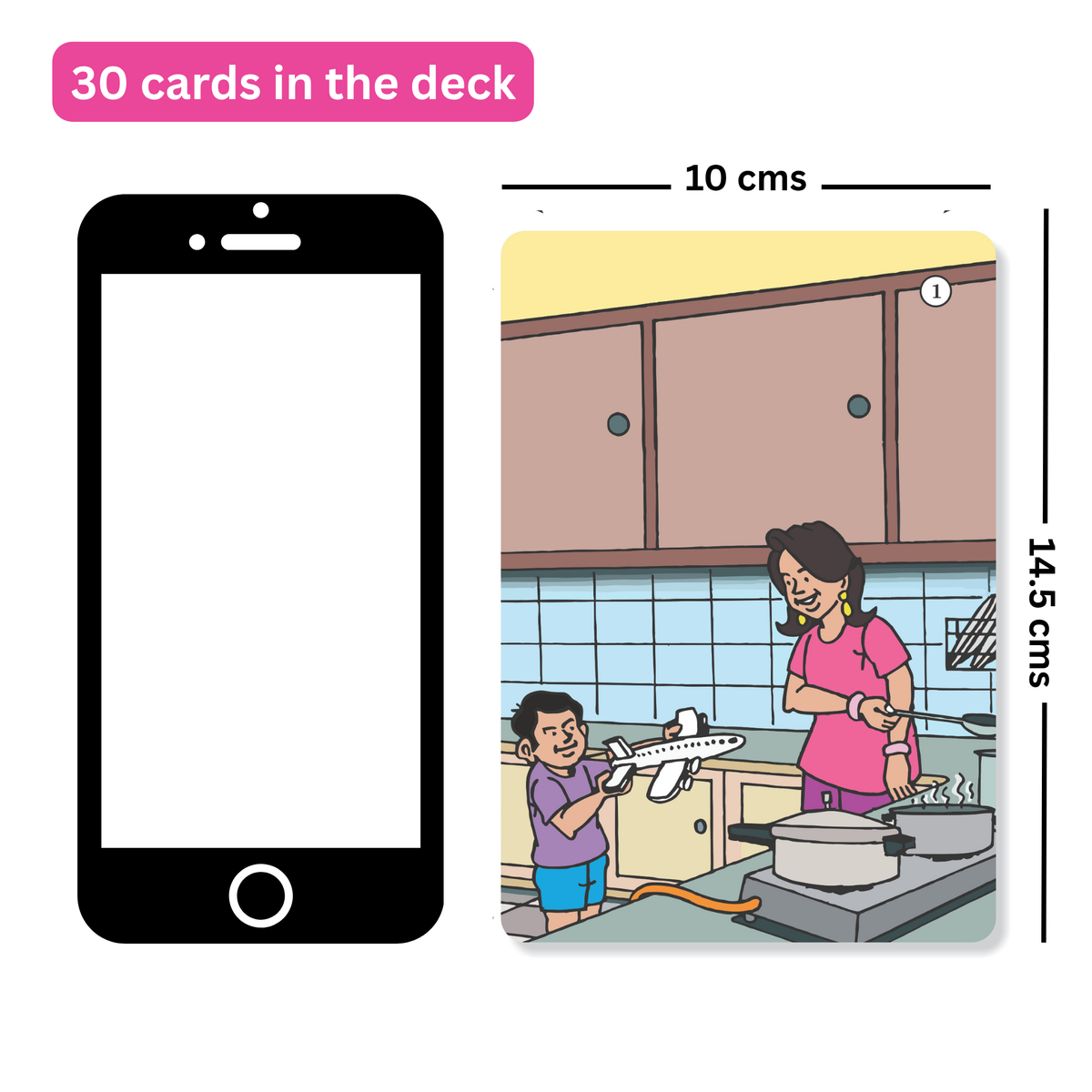
- 30 jumbo cards: 10 stories × 3 parts, 14.5 × 10 cm
- Cue cards for the beginning, middle and end, as story markers: "What happened first?", "What happened next?", "How did it end?"
- No text and no ordering clues on the picture cards, so children sequence independently and use their own words
- The three cards of a story share a number (1, 1, 1), so adults can group them easily without giving away the order
- Key card with the sentences for every story, plus QR codes for the audio
- Writing lines on the back for children to practise writing, or for parents to write the story in their own language
- Sturdy glossy laminated card with rounded corners
- Audio in 6 languages: English, Hindi, Tamil, Telugu, Kannada and Punjabi
- Ages 3+
- Follows the developmental sequence of early language
- Chatterbugs app access code included
- Designed by speech and language professionals
How the stories work
Each story has a clear beginning, middle and end. For example:
- The old man was walking with an umbrella.
- The wind blew the umbrella away.
- The old man ran after the umbrella.
Because the cards carry no words, children have to look closely, work out what's happening and why, and put it into their own sentences. Linking events with "first", "then" and "at the end" is the foundation for retelling their day, following stories at school and, later, writing.
How the audio works
- Go to chatterbugs.app and enter the code from your box.
- Choose a language.
- Scan a QR code on the key card to hear that story's three sentences.
In the app you can slow the audio down, replay any sentence, and record your own voice as the model. Audio plays online, so you'll need an internet connection.
How to use the cards
- Mix them up. Find the three cards with the same number and give them to your child in any order.
- Put them in order. Lay out the three cue cards and ask your child to place each picture card on the right one.
- Tell the story. Point to each cue card in turn: "What happened first? What happened next? How did it end?"
- Check with the key card. Play the audio or read the sentences and compare.
- Ask why. "Why did he run?" Linking cause and effect makes the story richer.
Who it's for
- Children who use sentences and are ready to link them into a story
- Children who find it hard to retell events or explain what happened
- Children with speech or language delays, including children with autism
- Children learning English as an additional language, or a home language alongside English
- Parents, teachers and speech and language therapists
Where it fits
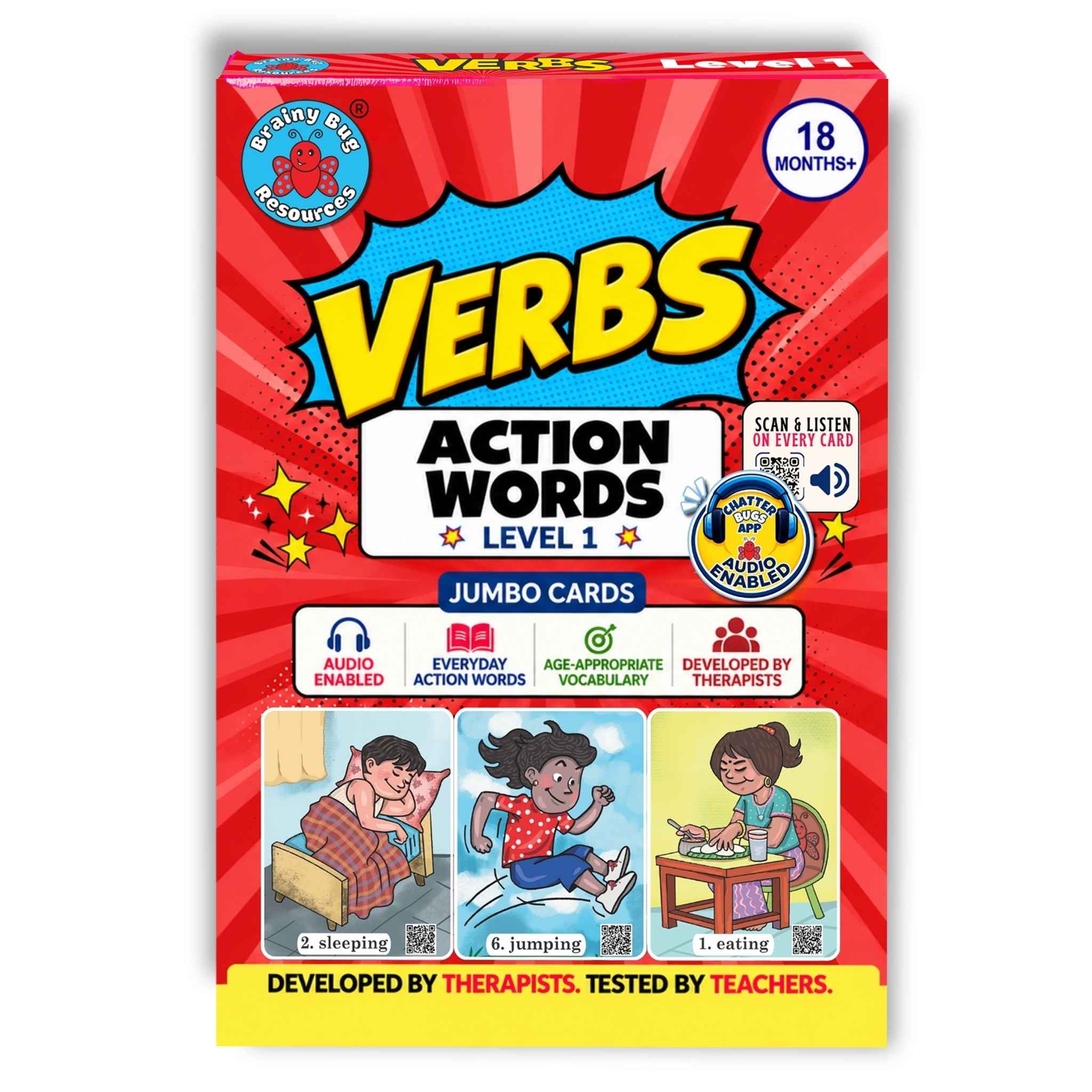
- Before: Verb Sequences, the same action in the past, present and future
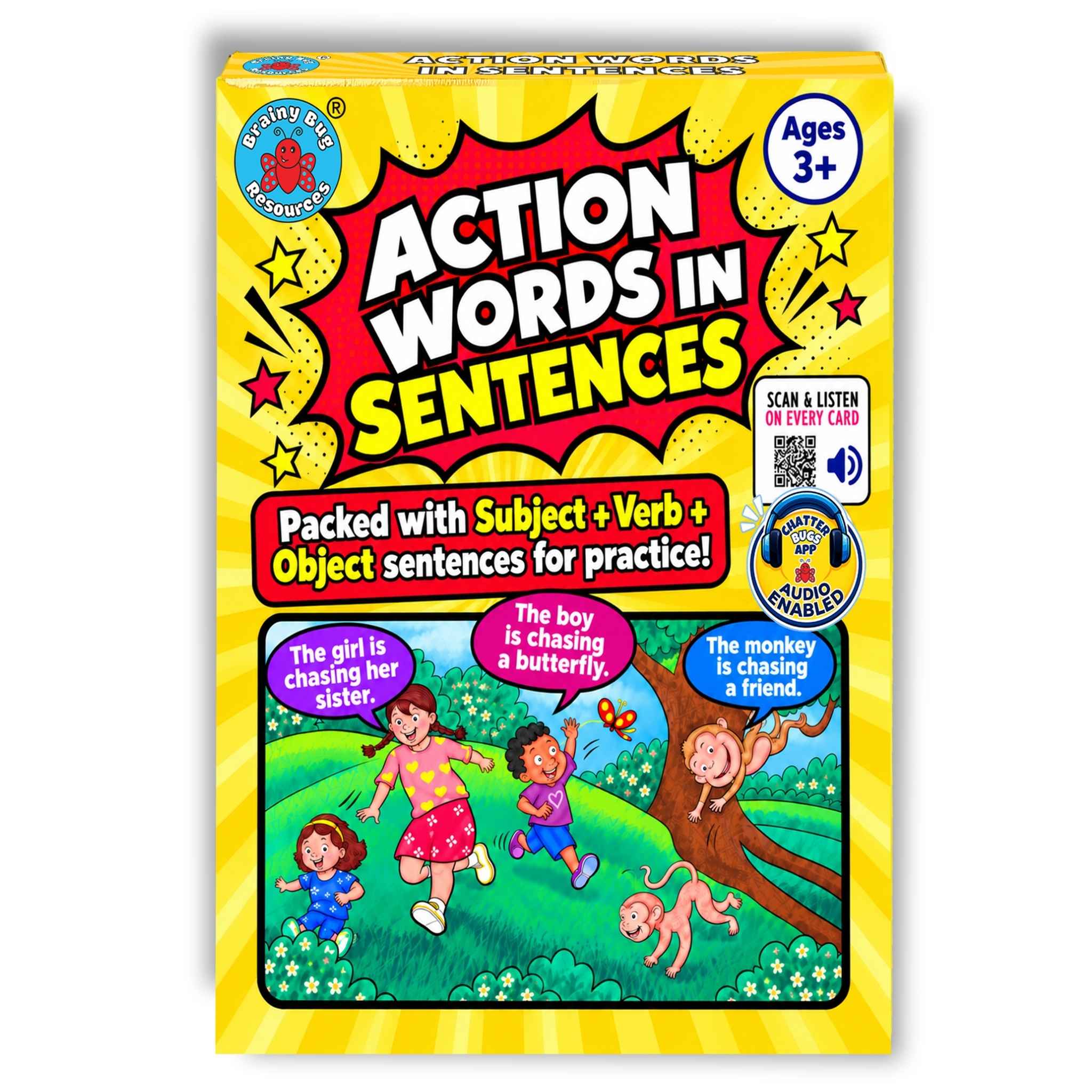
- Before: Action Words in Sentences, using verbs in full sentences
- Next: Answer Why, explaining reasons and cause and effect
- Next: Super Solver 1, using clues to work out what happened
- Use alongside: What Next?, future tense and prediction
- Use alongside: Advanced Action Words Megadeck, 104 more verbs for richer stories
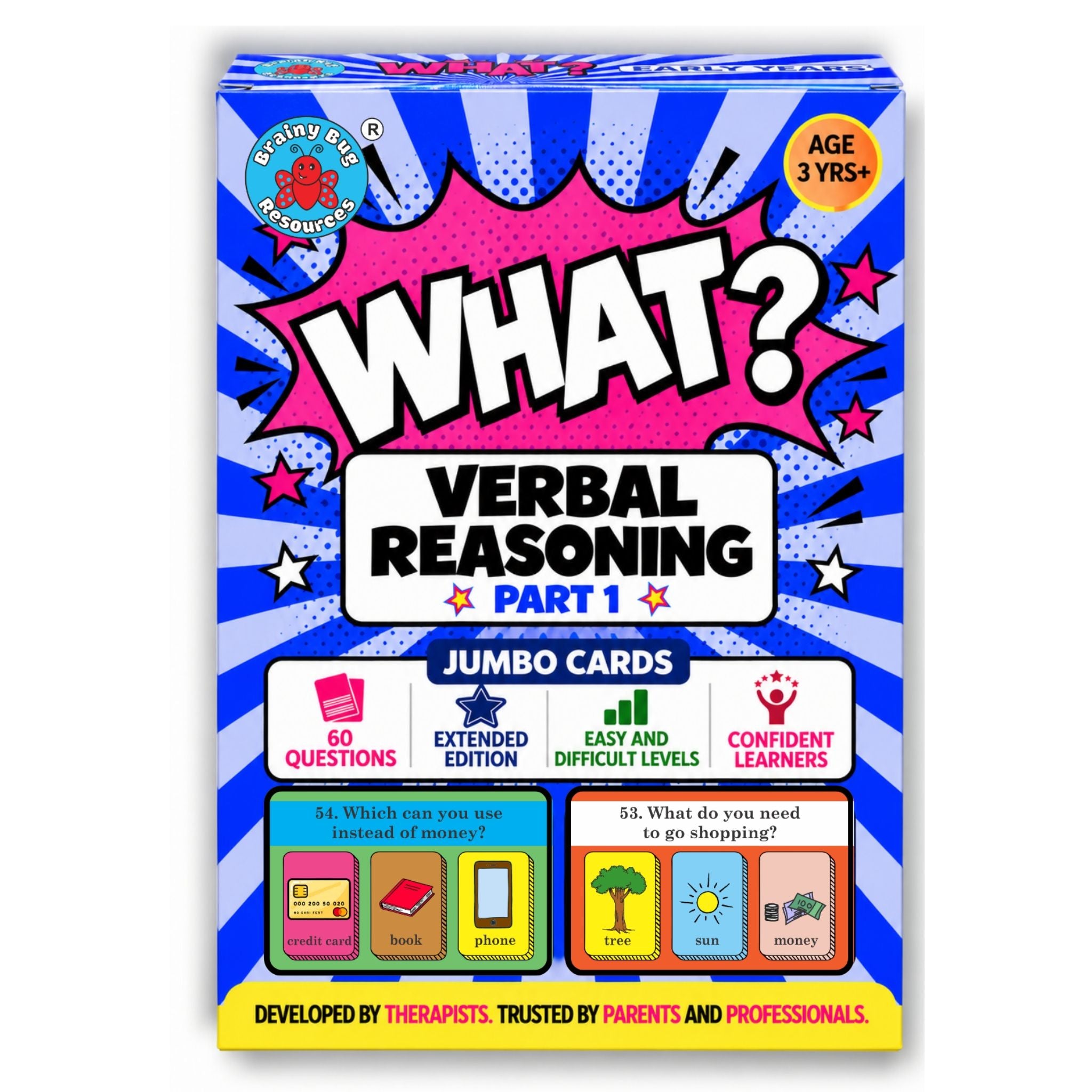
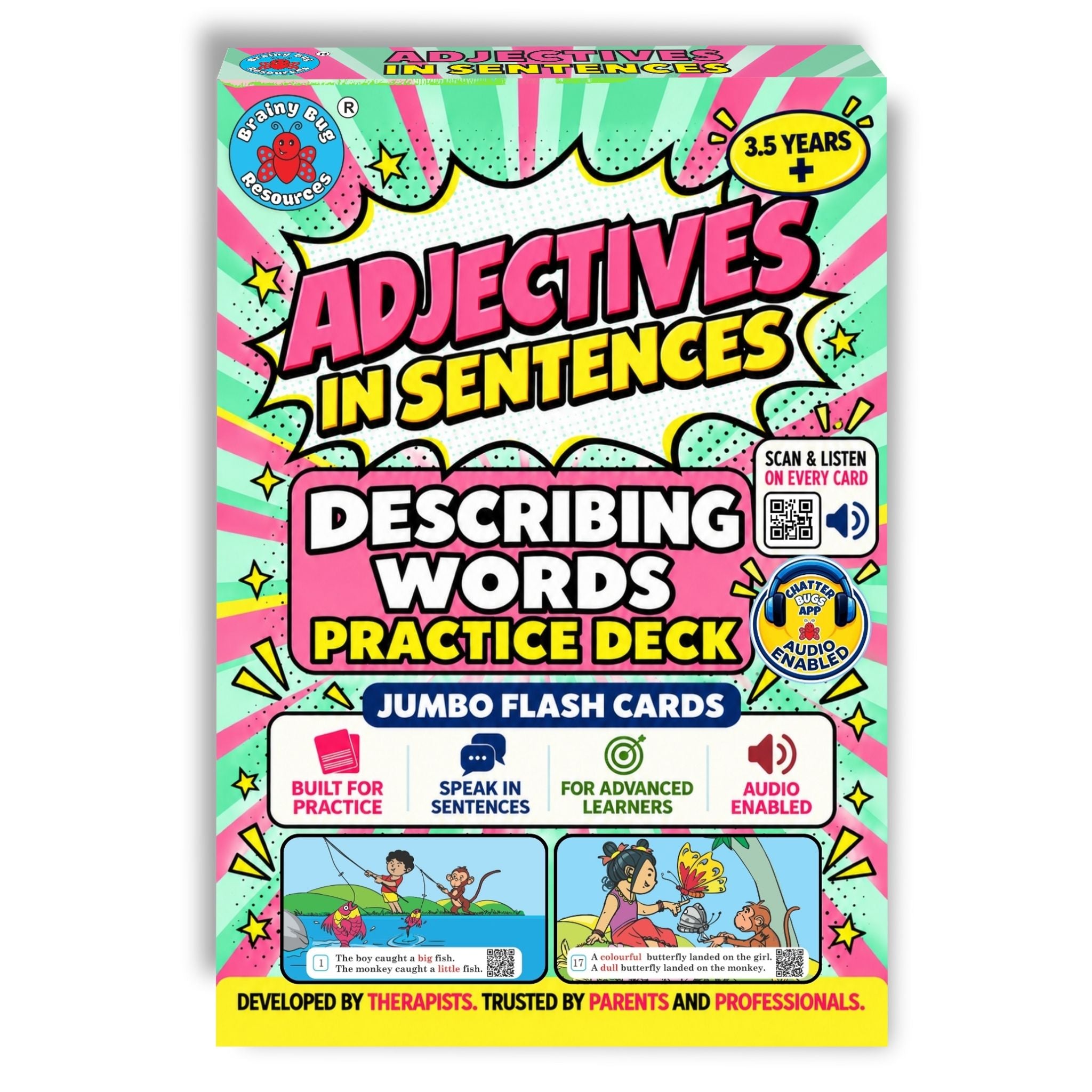
- Better value: Sentence Learners Smart Bundle, six decks including this one, for less than buying them separately
Who made it
Brainy Bug Resources decks are designed by speech and language professionals with extensive clinical experience in mainstream schools, special schools and community clinics. Each deck follows how children's language actually develops, from single words to two-word phrases, sentences and reasoning.
Frequently asked questions
What age is it for?
3 years and up. It also suits older children who find it hard to retell events in order.
How many stories are there?
10, each told in three picture cards.
What are the cue cards for?
They help children organise the story. Lay out the three cue cards, then your child places the beginning picture on the "What happened first?" card, the middle on "What happened next?" and the end on "How did it end?". With the cards in place, the story is ready to tell.
Why is there no text on the cards?
So children use their own words rather than reading or copying. The sentences are on the key card when you want to check.
What do the numbers on the cards mean?
All three cards of a story share the same number, so adults can group a story quickly. The numbers don't show the order, so children still work that out themselves.
What's on the back of the cards?
Writing lines. Children can practise writing, or parents can write the story in their home language.
Which languages are included?
English, Hindi, Tamil, Telugu, Kannada and Punjabi.
Do I have to pay for the audio?
No. An access code comes with the deck.


- Who We Are
- What Makes Us Unique
Brainy Bug Resources is built by speech and language therapists with extensive clinical experience in mainstream schools, special schools and community clinics. Because language lies at the heart of all learning, our range goes beyond first words, covering vocabulary, grammar, reasoning, emotions, storytelling, phonics and more. Every resource follows the order in which children's language develops.
- Built in developmental order. Each deck has a clear place in a child's language journey, so you always know the next step.
- Audio in up to 9 languages. Hear every word and sentence through the Chatterbugs app, slow it down, or record your own voice as the model.
- Designed to get children talking. Picture-only sides, a monkey character and contrast sets give children a reason to find the words themselves rather than copy them.
- Space for your home language. Writing lines on the back let parents add words in the language they speak at home.
- Made for home, classroom and therapy. The same cards work for a parent at the dinner table and a therapist in a session.